Drill & Fill Insulation Minnesota

High-performance retrofit wall insulation for existing Minnesota homes. Eliminate cold wall drafts and lower energy loss without tearing down drywall.

Quick Answer: What Is Drill and Fill Insulation?

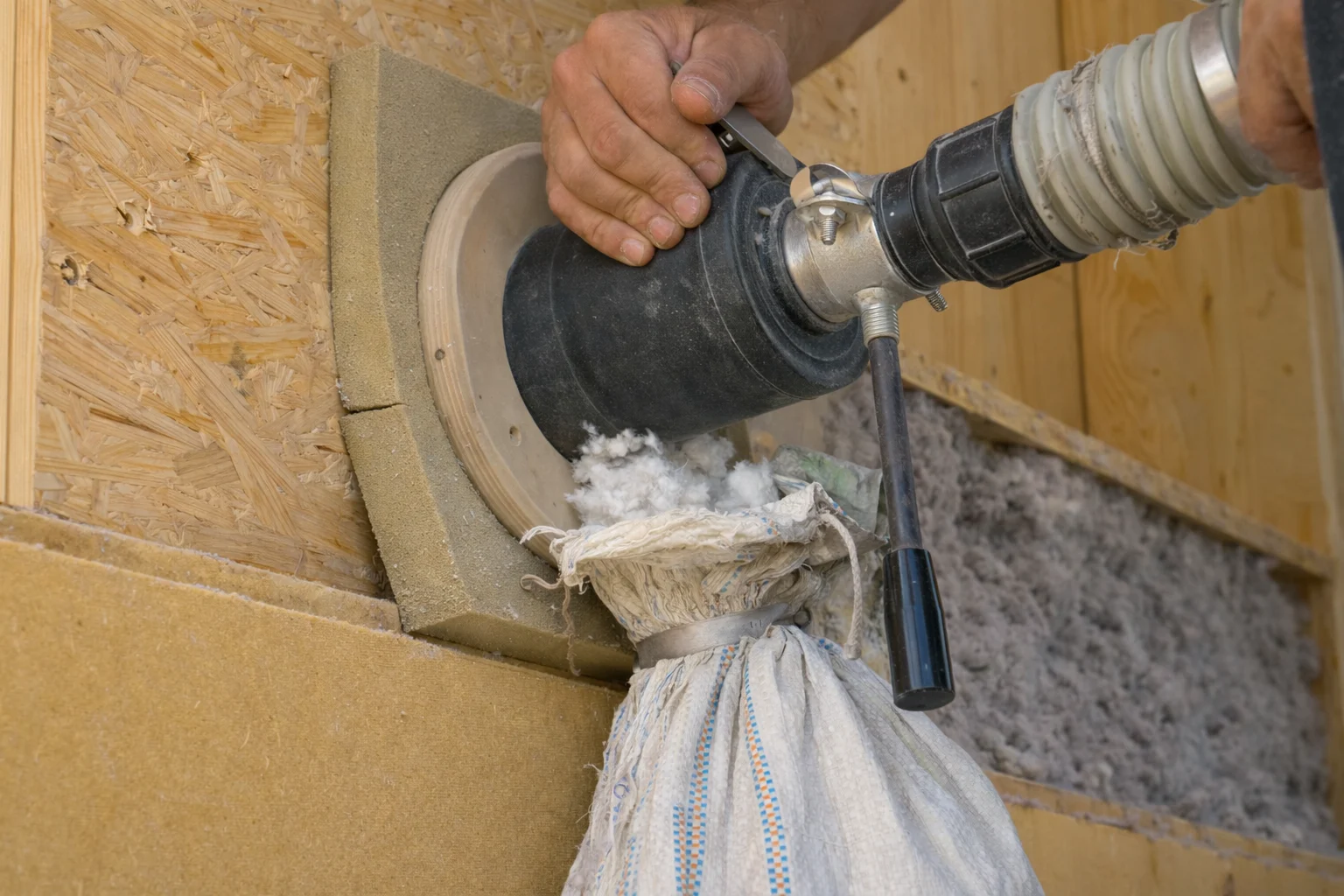
Drill and fill insulation is a specialized wall retrofit method designed to insulate uninsulated or under-insulated exterior walls in existing homes without major demolition. Trained insulation technicians drill small 1.5 to 2-inch access holes into individual wall stud cavities, usually from exterior siding or interior drywall. Using commercial blowers, dense-pack cellulose insulation is injected under high pressure (3.5 to 4.0 pounds per cubic foot) to fill empty cavities, seal internal framing voids, stop winter convective air drafts, and restore home energy efficiency.

Retrofit Insulation Technology

Upgrading Existing Walls Without Wall Demolition

Drill & Fill Insulation Services on Minnesota Exterior Wall Retrofit

Thousands of homes constructed prior to modern energy codes possess completely empty exterior wall cavities. In Minnesota's severe winter climate, these hollow stud bays act like uninsulated chimneys, allowing heat to escape continuously through exterior sheathing and siding. Upgrading these walls historically required ripping down interior plaster or drywall, creating immense dust, expense, and disruption.

Drill and fill wall insulation provides a clean, cost-effective retrofit solution. By utilizing high-density pneumatic injection equipment, insulation contractors can dense-pack recycled cellulose or virgin fiberglass directly into existing wall cavities. According to technical guidance from the U.S. Department of Energy Building Insulation Guidelines, insulating exterior wall cavities is one of the single most impactful retrofits a homeowner can undertake to reduce heating loads and eliminate cold interior wall surfaces.

Crescent Moon Insulation specializes in high-density wall retrofits across Minnesota. Our technicians carefully inspect your home's wall assembly, identify empty stud bays, and execute a precise dense-pack installation that preserves your interior finishes and exterior curb appeal.

No Drywall Removal

Insulation is blown through small access ports, eliminating major interior structural demolition.

High-Density Air Sealing

Dense-packed cellulose fills tiny cracks around wiring, plumbing, and framing junctions.

Substantial Energy Savings

Reduces wall heat loss by up to 70%, significantly lowering monthly fuel bills.

Acoustic Sound Dampening

Blocks outdoor street noise, wind howl, and neighborhood disturbances for a quiet home interior.

Building Science & Efficiency

Why Minnesota Exterior Walls Lose Massive Amounts of Heat

In International Energy Conservation Code (IECC) Climate Zones 6 and 7, which encompass central and northern Minnesota, winter temperatures routinely fall below zero degrees Fahrenheit. Uninsulated exterior walls experience intense thermal conduction and convective loop formation within empty stud spaces.

Research published by the University of Minnesota Extension Existing Wall Insulation Guide reveals that exterior walls account for roughly 25% to 35% of total building envelope heat loss in uninsulated older homes. Warm air inside the living space heats the interior drywall, which radiates heat into the hollow wall cavity. Air against the cold exterior sheathing falls while air against the warm drywall rises, setting up a continuous internal air loop that strips heat from the home.

Furthermore, hollow wall cavities allow air infiltration driven by wind pressure and stack effect. Cold outdoor air penetrates gaps in exterior wood siding and sheathing, flowing freely through electrical outlets, baseboards, and window trim into living rooms and bedrooms. Dense-pack cellulose insulation stops this convective cycle completely by occupying every cubic inch of cavity space under active pressure.

Animated Graphic: Convective Drafts vs Dense-Pack Insulation

See how hollow wall cavities create internal cold draft loops versus dense-pack wall cavities blocking air movement.

EMPTY WALL CAVITY (UNINSULATED) COLD OUTSIDE (-10°F) WARM INSIDE (70°F) Severe Heat Loss & Convective Loops DENSE-PACK RETROFIT (R-13 to R-21) PLUG AIR FLOW BLOCKED 100%
Methodology & Workmanship

Step-by-Step Drill and Fill Installation Workflow

Achieving high thermal resistance and complete cavity coverage requires strict adherence to technical installation standards. As outlined in the Pacific Northwest National Laboratory Dense-Pack Insulation Resource, cellulose must be injected at a density of at least 3.5 lbs per cubic foot to eliminate settling over time.

  1. Initial Thermal Inspection & Cavity Mapping: Technicians utilize infrared thermal imaging cameras to scan exterior walls, locating hidden fire-blocks, electrical boxes, plumbing runs, and existing insulation voids.
  2. Access Hole Drilling: Small 1.5 to 2-inch access holes are drilled into each stud bay. When working from the exterior, lap siding boards are carefully lifted or drilled through. When working from the interior, access holes are placed neatly into plaster or drywall.
  3. Flexible Hose Insertion & High-Pressure Packing: A flexible dense-pack hose is inserted all the way to the top or bottom of the stud cavity. Specialized commercial blowers force cellulose fibers into the bay while the hose is slowly retracted, packing the cavity tightly from end to end.
  4. Density Verification: Technicians measure material consumption against cavity volume to confirm that the target 3.5 to 4.0 lb density threshold is reached throughout every wall bay.
  5. Plug Installation & Surface Restoration: Custom-fit tapered wooden or foam plugs are inserted into every access hole. Plugs are sealed against moisture and air leaks. Siding is reinstalled, or interior drywall is patched smooth for paint readiness.

Cutaway Illustration: Cross-Section of a Retrofitted Wall Bay

Detailed technical diagram showing siding, access plug, dense-pack cellulose material, studs, and interior drywall.

Exterior Siding Sheathing Sealed Access Plug Dense-Pack Cellulose (3.8 lbs/cu.ft.) Stud Bay Cavity (3.5" Depth) Drywall INTERIOR HOME Draft-Free & Quiet
Material Selection

Drill and Fill Material Comparison: Cellulose vs Foam vs Fiberglass

Choosing the right retrofit insulation product is vital for thermal longevity and moisture management. The table below details key performance metrics across common wall injection materials:

Performance Metric Dense-Pack Cellulose Injection Foam Loose Fiberglass
R-Value Per Inch R-3.6 to R-3.8 R-4.2 to R-4.8 R-3.2 to R-3.4
Target Density 3.5 - 4.0 lbs / cu. ft. 1.2 - 1.8 lbs / cu. ft. 1.8 - 2.2 lbs / cu. ft.
Air Sealing Capability Excellent (Fills micro-cracks) Superior (Expands in voids) Moderate (Air can filter through)
Settling Resistance High (Zero settling at target density) High (Rigid structure) Moderate (Can settle if under-packed)
Fire Resistance Class A (Boric acid treated) Class A (Flame retardant) Naturally Non-Combustible
Cost Efficiency Best Value / Highly Cost-Effective Higher Material Cost Moderate Value

Interactive Calculator: Retrofit Wall Savings & Bag Estimator

Estimate your dense-pack cellulose requirements, energy bill savings, and payback period for your Minnesota wall insulation retrofit.

Estimated Retrofit Output
Estimated Cellulose Bags Required (30 lb bags)
59 Bags
Estimated Annual Winter Heating Savings
$392 / Year
Estimated Simple Payback Period
3.8 Years

*Estimates based on Minnesota climate data and DOE dense-pack cellulose density standards. Actual savings vary by home efficiency.

Data Chart: Wall Heat Loss Reduction Across Home Vintages

Comparison of wall thermal heat loss rate (BTU / Hour) before and after dense-pack drill & fill insulation.

24k BTU 16k BTU 8k BTU 0 BTU 22,500 5,800 Pre-1950 Homes (Empty Cavities) 18,200 5,200 1950-1970 Homes (Minimal Fiber) 12,800 4,500 1970-1990 Homes (Settled Batts) Uninsulated Wall Loss Post Dense-Pack Loss
Precision Craftsmanship

Installation Access Across Various Exterior Siding Types

One of the primary concerns homeowners express is how access holes affect their home's exterior appearance. Professional drill and fill procedures utilize specialized siding removal tools to ensure seamless aesthetics upon project completion.

Vinyl and Aluminum Siding

Vinyl siding is remarkably flexible and ideal for drill and fill retrofits. Technicians use a specialized zip tool to unhook individual siding courses. Access holes are drilled through the underlying wood sheathing into each stud bay. Once insulation is dense-packed, holes are plugged with sealed wooden stoppers, sheathing tape is applied, and the vinyl siding course is snapped back into position without leaving any visible exterior marks.

Wood Lap, Cedar Shingle, and Fiber Cement Siding

With wood or hardboard lap siding, technicians drill neat 1.5-inch access holes directly through the siding boards at uniform heights. After high-pressure dense-packing is complete, custom tapered cedar or wood plugs are coated in waterproof adhesive and driven flush into the holes. Plugs are sanded smooth, primed, and caulked to receive exterior paint.

Stucco, Brick Veneer, and Interior Access Options

For homes wrapped in brick veneer, stone, or thick historical stucco where exterior drilling is impractical, the drill and fill process is conducted from the inside. Technicians drill through interior plaster or drywall, inject dense-pack cellulose, install expanding plugs, and apply a multi-coat drywall patch smooth enough for painting.

Answers to Common Questions

Frequently Asked Questions About Drill and Fill Wall Insulation

Contractors use the drill and fill insulation method. Small 1.5 to 2-inch holes are drilled into every exterior stud cavity either through exterior siding or interior drywall. Dense-pack cellulose insulation is blown under high pressure through long flexible tubes to pack every cavity densely before holes are plug-sealed and finished.

Properly installed dense-pack cellulose does not settle. When pneumatic blowers pack cellulose at a density of 3.5 to 4.0 pounds per cubic foot, the interlocking wood fibers create a dense mass that supports its own weight and withstands gravity and structural vibrations indefinitely.

Yes. Drill and fill insulation can be installed year-round. Because dense-pack cellulose is a dry blown insulation process that does not require liquid chemical curing, installation proceeds smoothly regardless of freezing outdoor temperatures.

Uninsulated exterior wall cavities allow warm air to rise into the soffit and roof overhang area, melting roof snow cover. By insulating exterior walls and pairing the work with attic air sealing solutions, indoor heat is trapped in the living area rather than warming the roof deck.

Yes. Modern cellulose insulation is manufactured from recycled paper treated with natural borate minerals. Borates impart Class A fire resistance and create an inhospitable environment for mold spores and wood-destroying insects.

Our Workmanship Standard

Our 4-Step Wall Retrofit Installation Process

01

Project Review

We assess existing wall construction, insulation levels, and access points.

02

Specification & Proposal

You receive a clear plan outlining insulation method, scope, and pricing.

03

Coordinated Installation

Small access holes are drilled and insulation is blown into each wall cavity.

04

Inspection & Sign-Off

All openings are patched and sealed, ensuring a clean finished result.

Upgrade Your Wall Insulation Without a Full Remodel

Contact Crescent Moon Insulation to discuss drill and fill insulation for your home.