Attic Air Sealing Services

Reduce energy loss, prevent ice dams, and lower utility bills with precision attic air sealing across Minnesota homes.

Energy Loss Prevention

What is Attic Air Sealing and Why Does Your Minnesota Home Need It?

Attic air sealing is the systematic process of locating and sealing unsealed gaps, cracks, and structural bypasses between a building's conditioned living space and unconditioned attic space. Utilizing expanding polyurethane foam, fire-rated caulks, and rigid foam insulation boards around top plates, light fixtures, and plumbing vents, attic air sealing stops warm air exfiltration during winter and hot air infiltration during summer. This thermal boundary protection reduces home heating and cooling energy loss by up to 30 percent while preventing destructive roof ice dams.

In cold climate zones across Minnesota, heated indoor air naturally rises toward the top floor through buoyancy. Unsealed attic penetrations act as chimneys, venting warm air into the attic space and drawing cold outside air through lower-level wall gaps and crawl spaces.

Without professional attic draft sealing, even high R-value insulation loses thermal efficiency because air movement strips heat away. Sealing the attic ceiling plane establishes a continuous air barrier, allowing your home's thermal insulation to perform at maximum efficiency.

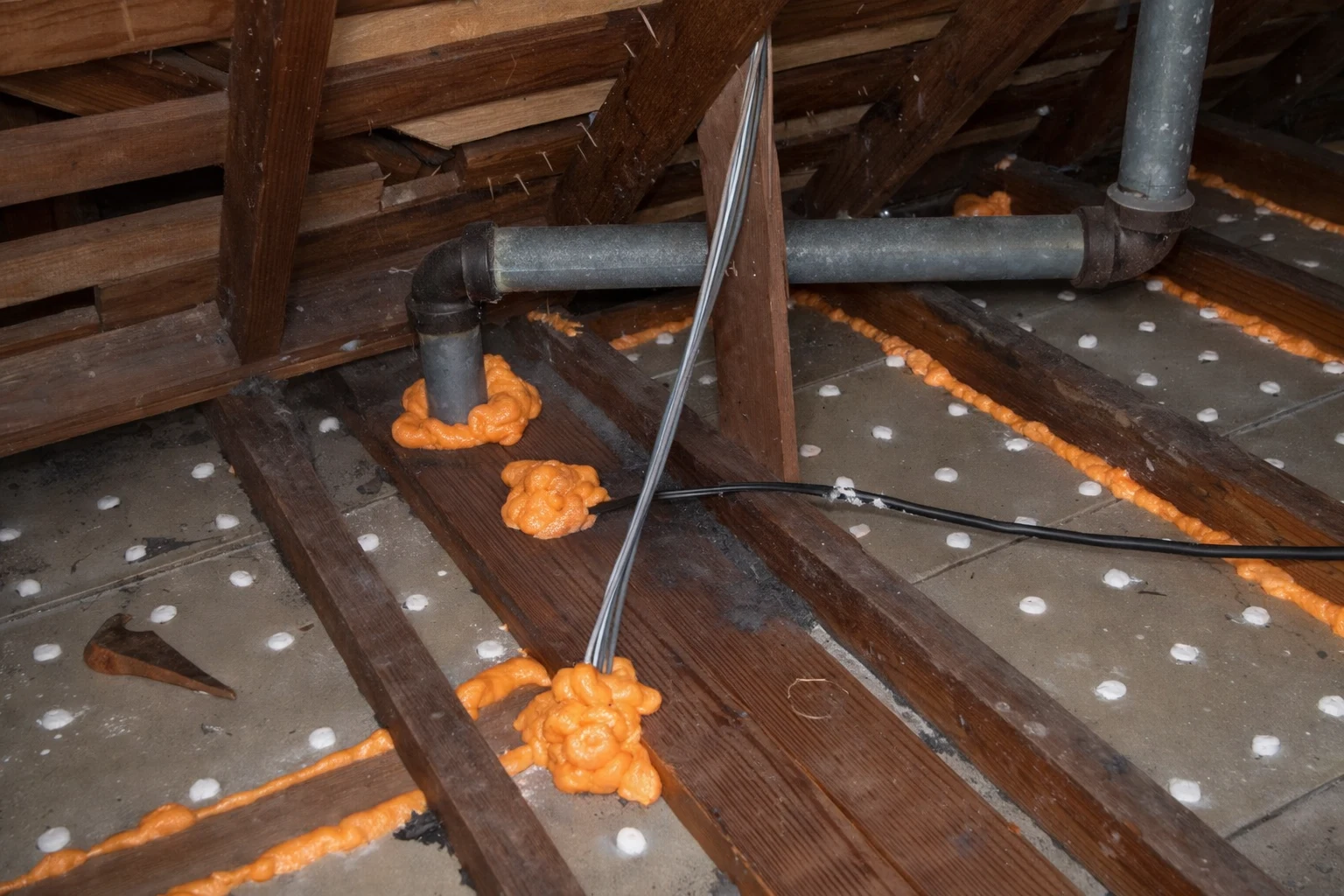
Professional attic air sealing around penetrations in Minnesota
Thermal Dynamics

Understanding the Stack Effect in Cold Climate Homes

When warm indoor air escapes into the attic, it creates negative pressure on the lower levels of your home, constantly drawing freezing outdoor air through windows, doors, and floor joists.

Attic Stack Effect & Air Bypass Cutaway Visual

Illustrating unsealed thermal leakage vs. a sealed attic air barrier ceiling plane.

UNSEALED ATTIC BYPASSES Heat Loss Through Top Plates & Vents High Energy Bills & Drafty Rooms SEALED CONTINUOUS AIR BARRIER Expanding Polyurethane Foam Barrier Heat Retained in Living Quarters Balanced Comfort & Low Energy Costs

According to technical research by the U.S. Department of Energy Air Sealing Guide, air leakage can account for up to 40 percent of total energy used to heat and cool a residential home. In Minnesota's severe winter climate, controlling thermal stack pressure is essential for energy conservation and building protection.

Performance Benefits

The Measurable Benefits of Professional Attic Air Sealing

Sealing attic air leaks produces immediate, lasting improvements to indoor comfort, building durability, and monthly utility expenses.

Reduced Utility Bills

Stops continuous heat exfiltration, reducing natural gas and electricity consumption for heating and cooling systems by up to 30 percent.

Consistent Room Temperatures

Eliminates cold ceiling drafts and room temperature imbalances between lower and upper floor living areas.

Moisture & Frost Prevention

Blocks warm, humid indoor air from entering the cold attic, preventing winter roof frost, structural wood decay, and ceiling water spots.

HVAC Equipment Longevity

Reduces heating furnace and air conditioner runtime, preventing premature equipment wear and decreasing maintenance frequency.

Citing research from the University of Minnesota Extension Attic Air Leaks and Ice Dams Guide, controlling indoor moisture migration into the attic space is the primary defense against structural roof sheath decay and ceiling water staining in upper Midwest homes.

Bypass Identification

Identifying Major Attic Air Leak Paths and Bypasses

Attic air leaks occur around penetrations cut into framing and ceiling drywall during original home construction. Even small gaps sum to a major thermal opening equal to leaving a window open year-round.

Bypass Location Air Leak Severity Thermal Impact Recommended Sealant Material
Interior Wall Top Plates Extreme High heat exfiltration across wall perimeters One-component expanding polyurethane foam
Recessed Can Lights High Direct heat chimney effect from living space Fire-rated airtight cover box & sealant
Plumbing Vent Stacks High Large open chase gaps around PVC/cast iron pipes Two-component spray foam & rigid foam board
Chimney & Flue Chases Critical Convective air current stack loss around metal flues Foil-faced sheet metal & high-temp silicone
Attic Access Hatch Moderate to High Unsealed lid perimeter allows major heat leakage EPDM rubber gasket weatherstripping & rigid board
Electrical Wiring Penetrations Moderate Draft holes drilled through top plate framing Fire-block polyurethane expanding foam

The ENERGY STAR Attic Air Sealing Guide emphasizes that sealing structural attic bypasses prior to adding insulation provides the single highest return on energy investment for residential home retrofits.

Sealing Technology

Precision Sealing Materials and Air Barrier Technology

Different attic bypasses require specific, code-compliant sealing materials to ensure long-term durability and proper thermal performance.

Animated Air Bypass Seal & Insulation Cutaway

Visualizing draft elimination when expanding foam seals framing gaps beneath attic insulation.

Ceiling Drywall Plane 2x4 Top Plate Framing Expanding Polyurethane Foam Seal Thermal Insulation Layer Convective Indoor Heat Current (Blocked)

Code-Compliant Sealant Specifications

Our installation team utilizes specialized sealants rated for specific building assemblies:

  • One-Component Polyurethane Foam: Expands to fill minor framing cracks, top plate joints, and electrical wire penetrations.
  • Two-Component Closed-Cell Spray Foam: Provides structural rigidity and high R-value air sealing across wide framing gaps and plumbing chases.
  • Fire-Rated High-Temperature Silicone: Applied around metal chimney flues and gas vent pipes to meet strict fire resistance standards.
  • Foil-Faced Polyisocyanurate Board: Used to span large drop-ceiling openings and furnace chase voids before foam sealing.
Data Analysis

Where Does Air Leakage Occur in an Unsealed Attic?

Building science diagnostics show that wall top plates and recessed light fixtures represent the majority of uncontrolled air leakage in unsealed attics.

Building Air Leakage Distribution by Attic Penetration Source

Average percentage of total attic air exfiltration across unsealed residential structures.

Interior Wall Top Plates 30% of Attic Air Leakage
Recessed Can Lights & Ceiling Fixtures 20% of Attic Air Leakage
Plumbing Vent Stacks & Duct Chases 18% of Attic Air Leakage
Chimney & Metal Flue Chases 15% of Attic Air Leakage
Attic Access Hatches & Pull-Down Stairs 12% of Attic Air Leakage
Electrical Wire Holes & Junction Boxes 5% of Attic Air Leakage

Technical data published by the PNNL Building America Solution Center Attic Air Sealing Guide indicates that sealing top plate joints and lighting penetrations delivers immediate reductions in house blower door CFM50 air leakage rates.

Winter Protection

How Attic Air Sealing Eliminates Winter Ice Dams

Roof ice dams are a destructive winter phenomenon caused directly by warm air escaping from living spaces into the attic.

The Ice Dam Formation Cycle

  1. Warm Air Exfiltration: Heated air leaks through unsealed top plates and light fixtures into the attic space.
  2. Roof Deck Heating: The escaping heat raises the temperature of the roof sheathing above freezing (32°F), melting snow on the upper roof.
  3. Refreezing at Overhangs: Melted water runs down the roof under the snow layer until it reaches the unheated cold eaves, where it refreezes into thick ice ridges.
  4. Water Backup: Subsequent meltwater backs up behind the ice dam, leaking beneath roof shingles and soaking ceiling drywall.

Attic air sealing breaks this destructive cycle by sealing ceiling penetrations. When warm indoor air stays inside the home, the attic space remains cold, preventing snow melt and keeping roof temperatures uniform.

Installation Workflow

Our Professional 4-Step Attic Air Sealing Process

We follow a meticulous engineering workflow to locate, prepare, and seal every air bypass in your attic structure.

01

Diagnostic Audit

Thermal imaging scanning and blower door leakage testing to pinpoint hidden ceiling air bypasses.

02

Prep & Clearance

Moving existing insulation away from wall top plates and framing penetrations to expose leakage points.

03

Precision Air Sealing

Applying high-expansion foam, fire-rated sealants, and rigid foam boards over all open bypasses.

04

Quality Verification

Installing vent baffles, checking attic ventilation, and conducting post-sealing pressure verification.

Once air sealing is complete, combining it with professional attic insulation installation and loose-fill blown-in fiberglass and cellulose ensures complete thermal protection. In homes where older insulation has sustained rodent contamination or moisture damage, our team performs old damaged insulation removal and attic decontamination and sanitization prior to sealing.

Interactive Estimator

Attic Air Sealing Savings & Leakage Reduction Estimator

Estimate your potential air leakage reduction (CFM50) and annual heating/cooling energy savings based on your home size and age.

Estimated Annual Savings
$485
CFM50 Leakage Reduction: ~850 CFM
Estimated Payback Horizon: 2.5 - 3.5 Years
Expert Guidance

Frequently Asked Questions About Attic Air Sealing

Clear answers to common questions regarding attic draft sealing, thermal barriers, and energy efficiency retrofits.

Should attic air sealing be done before adding new insulation?

Yes. Air sealing must always be completed prior to installing new attic insulation. While insulation slows conductive heat movement, it does not stop convective air currents. Sealing air leaks first establishes an airtight ceiling barrier, allowing thermal insulation to perform at its full rated efficiency.

How do you know if your attic has air leaks?

Common indicators of unsealed attic air bypasses include cold drafts in upper-floor rooms, uneven indoor temperatures, high winter heating bills, dark dust stains near ceiling electrical boxes, attic frost formation, and recurring winter roof ice dams.

Can attic air sealing stop ice dams completely?

Attic air sealing is the single most effective permanent defense against roof ice dams. By stopping warm indoor air from leaking into the attic space, roof deck surface temperatures remain cold, preventing snow melt and freeze cycles at the eaves.

What materials are used to seal attic penetrations?

Professional installers use one-part expanding polyurethane foam for small wiring holes, two-part spray foam for wide framing gaps, fire-rated silicone sealants around metal chimney flues, and foil-faced rigid polyisocyanurate foam boards over large drop ceiling chases.

Will attic air sealing make my home too tight?

Professional technicians evaluate total building tightness and ensure proper combustion air supply for heating equipment. Attic air sealing targets uncontrolled upper-envelope air leaks while maintaining balanced soffit-to-ridge roof ventilation.

Ready to Stop Attic Heat Loss & Ice Dams?

Contact Crescent Moon Insulation to schedule a professional attic air sealing assessment.