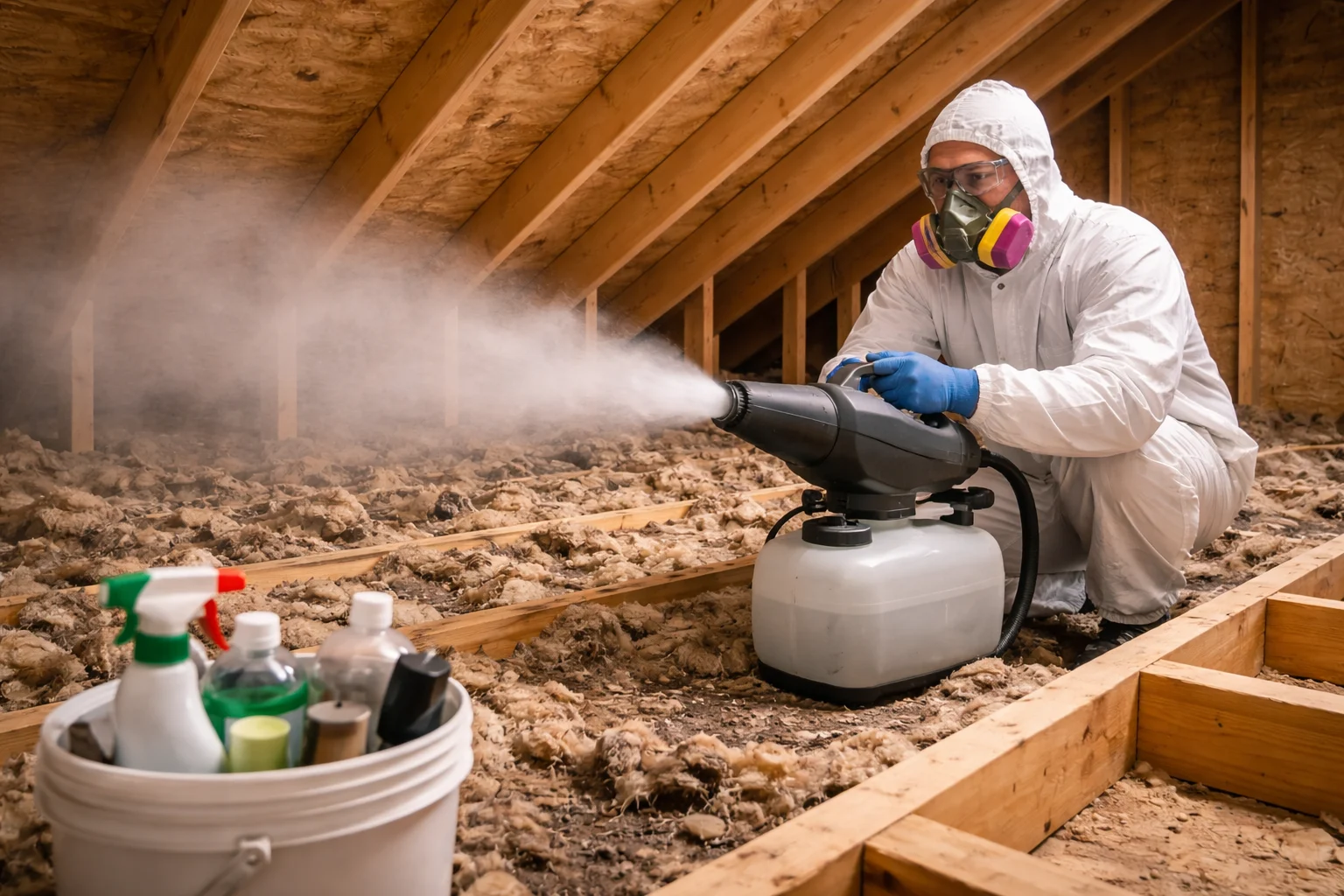
Professional Attic Decontamination Services in Minnesota

Thorough removal of rodent waste, viral biohazards, mold spores, and contaminated insulation to protect indoor air quality and restore energy efficiency.

Attic Biohazard Remediation

Restoring Clean Air and Structural Integrity to Minnesota Homes

Attics serve as the primary thermal barrier of any residential building, but unsealed cavities often trap atmospheric moisture, dust, and wild animal pests. Over time, mice, squirrels, raccoons, and bats nest within fiberglass and blown-in cellulose insulation, leaving behind concentrated layers of urine, feces, pheromones, and ectoparasites.

According to the US EPA Guidance on Biological Pollutants, airborne animal dander, fungal spores, and bacterial endotoxins trapped in attic spaces degrade residential indoor air quality. Heating and cooling equipment connected to leaky ductwork or unsealed access hatches pulls these airborne contaminants directly into bedrooms and living spaces through the natural stack effect.

At Crescent Moon Insulation LLC, we provide comprehensive attic insulation installation alongside technical attic decontamination. Our certified technicians isolate contaminated zones, extract ruined insulation with high-power vacuum equipment, and apply virucidal fogging treatments to ensure a hygienic home environment.

Attic Decontamination & Sanitization
Structural Cutaway Diagram

Attic Bio-Contamination & Air Migration Pathways

Visualizing how unsealed attic bypasses allow rodent waste dust and airborne fungal spores to drift from roof joists down into living quarters.

Pitched Roof Decking & Rafters Contaminated Insulation & Rodent Fecal Accumulation Layer Ceiling Sheetrock Unsealed Fixture Bypass Recessed Light Leakage Indoor Living Quarter (Breathing Zone) Airborne Odor & Spores Vents into ventilation ducts Thermal Stack Pressure Pulls air through ceiling gaps
Public Health & Biohazard Vector Analysis

Health Risks Associated with Attic Contamination

Wild animal infestation inside roof structures introduces serious biohazard risks to occupants. As documented in the CDC Rodent Cleaning Guidelines, dried animal urine and fecal pellets contain transmissible viral and bacterial agents that become suspended in dust particles when disturbed.

Guidance from the University of Minnesota Extension Wildlife Management highlights that deer mice and house mice frequent residential attic spaces to forage during harsh winter months, leaving behind extensive biological contamination within fiberglass blankets.

Rodent Droppings & Urine

Mice and rats deposit thousands of droppings annually. Dried urine and fecal matter break down into volatile dust particles that contain pathogens.

Primary Threat: Hantavirus Pulmonary Syndrome (HPS), Leptospirosis, & Lymphocytic Choriomeningitis.

Bat Guano & Histoplasmosis

Bat colonies roosting along attic ridge vents produce thick guano deposits. Moist guano supports the growth of Histoplasma capsulatum fungal spores.

Primary Threat: Airborne Fungal Spore Inhalation causing severe respiratory infections.

Raccoon Latrines

Raccoons establish centralized latrines in attic corners, saturating ceiling sheetrock with urine and heavy fecal matter containing roundworm eggs.

Primary Threat: Baylisascaris procyonis eggs capable of surviving years in wood framing.
Biological Contaminant Common Vector Airborne Exposure Route Recommended Remediation Protocol
Hantavirus Particles Deer Mice (Peromyscus maniculatus) Inhalation of aerosolized rodent fecal dust during manual sweeping. HEPA-filtered vacuum extraction & quaternary virucidal fogging.
Histoplasma Spores Roosting Bat Guano & Bird Feces Disturbance of dry guano releasing microscopic fungal spores. Full containment, ULV antimicrobial fogging, complete removal.
Mycotoxins & Mold Spores Attic Moisture & Roof Leaks HVAC recirculation through unsealed ceiling penetrations. Fungal eradication misting, moisture control, & timber sealing.
Roundworm Parasites Raccoon Fecal Accumulation Direct contact or airborne dust drift from dried latrines. Physical extraction of saturated sheetrock, insulation, & sanitization.
Engineered Remediation Sequence

The 4-Stage Attic Decontamination Protocol

Effective decontamination requires strict containment procedures to isolate the work zone. We strictly implement protocol steps modeled after OSHA Biohazard Control Directives to keep indoor living environments thoroughly protected.

Stage 01

Containment & Negative Pressure

Technicians set up heavy plastic sheeting around attic access hatches and deploy industrial negative-pressure HEPA air scrubbers. This prevents airborne dust particles from entering hallway spaces during cleanup.

Stage 02

High-Vacuum Insulation Extraction

Using outside-mounted commercial vacuum equipment, damaged insulation, rodent nests, and biological debris are pulled through sealed 6-inch hoses directly into disposal containment bags. Learn more about our insulation removal process.

Stage 03

Virucidal & Antimicrobial Fogging

Attic framing, rafters, and floor joists are treated with an EPA-registered virucidal fogger. Ultra-low volume (ULV) misting penetrates deep into wooden grain to neutralize odor molecules, bacteria, and viral lingering elements.

Stage 04

Air Sealing & Re-Insulation

Once sanitized, open ceiling penetrations around electrical boxes and plumbing stacks are sealed. We then install fresh, energy-efficient insulation tailored to Minnesota standards. Explore our attic air sealing solutions and blown-in insulation services.

Animated Technical Visual

HEPA Air Scrubbing & Virucidal Misting System

Demonstrating negative pressure airflow scrubbing combined with ultra-low volume (ULV) fog mist distribution across exposed roof rafters.

HEPA FAN Negative Pressure Unit Particulate Intake Vector ULV Fogging System Active Bio-Neutralization & Air Scrubbing
Performance & Air Quality Metrics

Attic Bio-Contaminant Reduction & HVAC Efficiency Data

Quantitative metrics displaying indoor air particulate density, fungal spore counts, and HVAC system drag percentage before and after professional decontamination.

Pre-Decontamination Level Post-Decontamination Particulate (PM2.5) 185 µg 12 µg Mold Spores (CFU) 3,400 140 Volatile Odor Index 92 pts 4 pts HVAC Airflow Drag 38% 5% Relative Contaminant Concentration
Remediation Methodology Evaluation

DIY Cleaning vs. Professional Biohazard Decontamination

Attempting to clean rodent-infested attic spaces without commercial personal protective gear and containment systems creates severe health risks. Standard shop vacuums lack HEPA seal integrity, dispersing concentrated pathogen dust throughout home hallways.

Evaluation Feature DIY Homeowner Attempt Crescent Moon Professional Protocol
Personal Protection Equipment Basic dust mask (N95 or lower), unprotected skin exposure. Full-face respiratory protection, disposable Tyvek suits, double nitrile gloves.
Air Containment System None. Open access hatch lets dust migrate into hallways. Zipper containment barriers & outdoor-vented negative HEPA air scrubbers.
Vacuum Filtration Rating Standard shop vac blowing micro-particulates through exhaust filter. Outside-mounted 4800 CFM vacuum trailer with certified HEPA filtration stage.
Pathogen Eradication Surface spraying with household bleach (ineffective on wood grain). ULV thermal fogging of EPA-registered virucidal & botanical antimicrobials.
Biohazard Waste Disposal Standard municipal trash bins (violates local disposal codes). Heavy-duty sealed waste bags handled under certified bio-disposal guidelines.
Structural Air Sealing Omitted. Leaves air bypasses open for re-infestation. Polyurethane foam sealing of every ceiling electrical & plumbing penetration.

Interactive Attic Decontamination Scope Calculator

Estimate your biohazard remediation requirements, projected extraction volume, duration, and investment cost based on attic dimensions.

Projected Waste Volume
480 Cu. Ft.
Estimated Crew Work Hours
7 - 9 Hours
Bio-Containment Protocol
Level 2 HEPA Isolation
Estimated Investment Range
$1,850 - $2,400
Expert Guidance

Frequently Asked Questions About Attic Decontamination

Answers to common questions regarding attic biohazard extraction, air scrubbing, sanitization chemicals, and insulation replacement in Minnesota homes.

How do I know if my attic requires professional decontamination?

Key warning signs include strong ammonia-like odors in upper floor hallways, visible rodent fecal droppings around attic hatch openings, mysterious respiratory irritation among family members, compressed insulation batts, and nocturnal scratching sounds inside ceiling joists.

Can rodent droppings in the attic contaminate indoor living space air?

Yes. Air pressure differences created by heating systems, bathroom exhaust fans, and structural stack effect draw air up through ceiling penetrations. When air currents shift, dry fecal dust and fungal spores filter back down into bedrooms through unsealed light fixtures and electrical boxes.

What chemical treatments are used during attic sanitization?

Our technicians apply EPA-registered quaternary ammonium and botanical antimicrobial fogging solutions. These treatments eliminate bacteria, viruses, and mold spores on contact without emitting toxic fumes or damaging wood framing.

How long does the attic decontamination process take?

Most residential projects require between one and two full working days. Project duration depends on overall square footage, accessibility of roof eaves, depth of contaminated insulation, and whether replacement insulation is installed immediately after sanitization.

Is it necessary to replace insulation after rodent contamination?

When animal urine and droppings permeate fiberglass or blown-in insulation, the material loses thermal resistance (R-value) while permanently retaining volatile organic compounds. Extraction of ruined insulation followed by wood sanitization and fresh insulation is recommended for long-term health and efficiency.

How do technicians protect living areas during extraction?

Work zones feature heavy-duty plastic containment barriers around the attic entry door, sealed floor runner protections, and outdoor-vented negative pressure HEPA air scrubbers. This guarantees zero dust or odor leakage into living quarters.

Complementary Building Performance Solutions

Related Insulation & Sealing Services

Ready to Restore Clean Air to Your Minnesota Home?

Contact Crescent Moon Insulation LLC today for a comprehensive attic inspection and a free decontamination estimate.